Watching Roots Grow

Meristem = Growth Zone
Jar 1 roots keep their tips; Jar 2 tips are removed.
Cells in the root tip meristem divide, pushing the root forwards.
Cutting the meristem stops division, so growth ends.
Key Points:
- Predict: Jar 1 roots will be longer after 5 days.
- Activity: mark starting length, measure daily to see growth.
- Conclusion: meristematic tissue drives root elongation.
Where Are Meristems?

Three Meristem Regions
Each region sits at a fixed location on the plant and has a distinct growth job.
Key Points:
- Apical – tips of roots & shoots; lengthens plant.
- Intercalary – nodes or leaf bases; restores lost parts quickly.
- Lateral – along stem & root sides; adds thickness (girth).
Plant ‘Pipes’: Xylem & Phloem
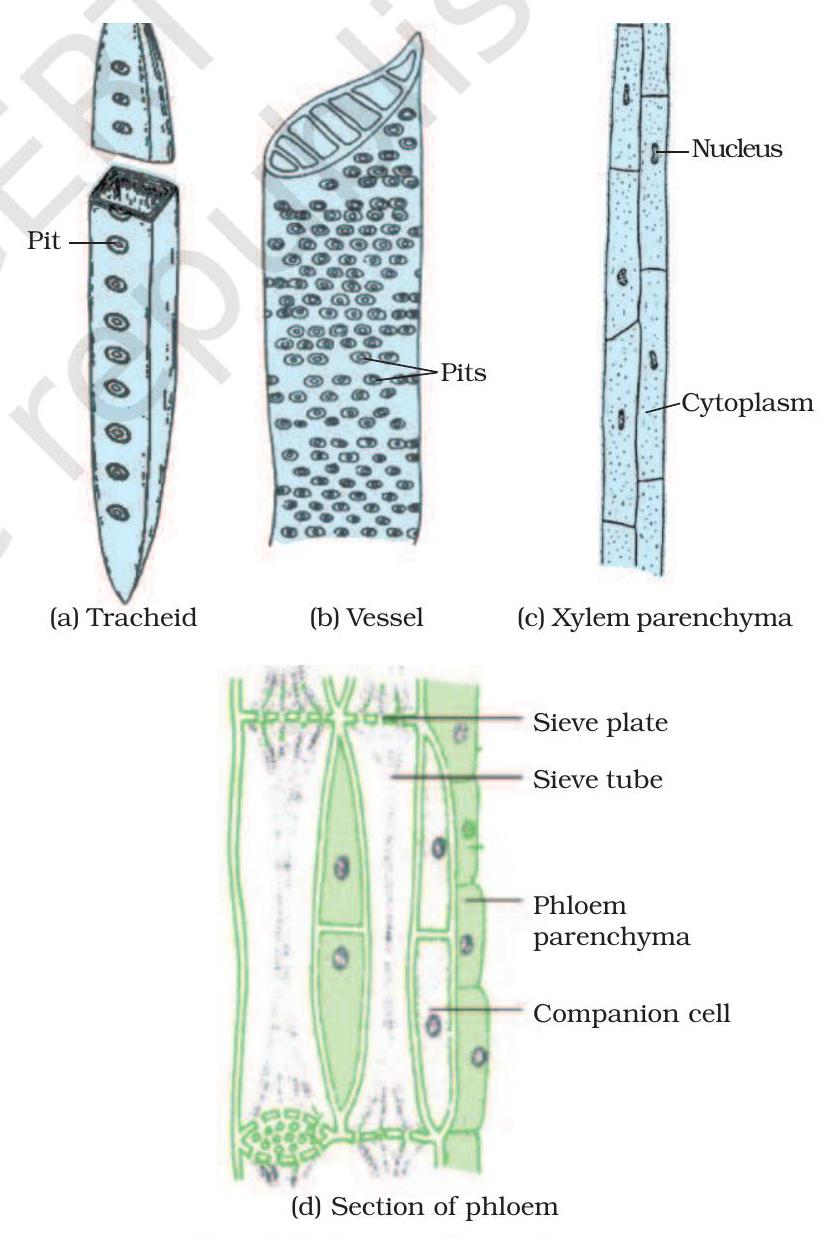
Complex vascular tissues move life’s essentials
Xylem pushes water upward from roots. Phloem delivers sugars to growing and storage parts. Together they ensure transport throughout the plant.
Key Points:
- Xylem parts – tracheids, vessels, fibres, parenchyma
- Phloem parts – sieve tubes, companion cells, fibres, parenchyma