Tissues Around Us When cells collaborate, life takes shape.

Meaning of Tissue

Tissue

A tissue is a group of similar cells that work together to perform one specific function efficiently.

Can you name a tissue you see every day?

Plants vs Animals

Plant Tissues

Many supportive tissues are dead, giving rigidity.
Growth is restricted to root and shoot tip meristems.
Large vacuoles store water; limited movement needed.

Animal Tissues

Most tissues stay living to perform active functions.
Muscle and nerve tissues allow quick movement.
Growth occurs throughout the body, not tip-limited.

Key Similarities

Both are groups of similar cells working together.
Cells arise from division of pre-existing cells.

Where Growth Happens
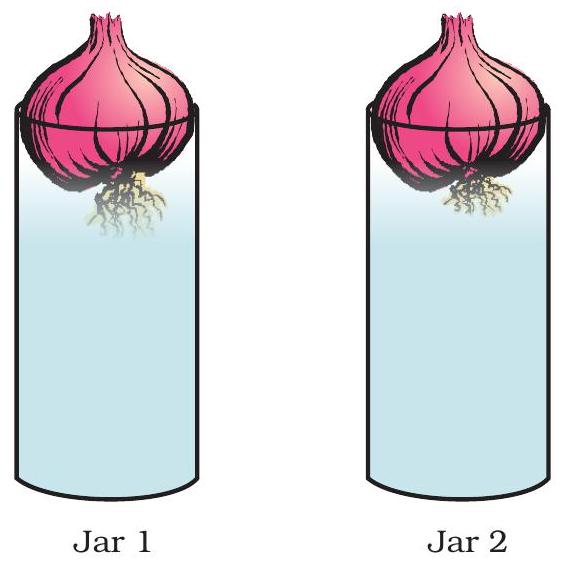
Onion root tip experiment

Onion-root experiment: Jar 1 intact tips vs Jar 2 cut tips

Onion-root activity

Jar 1 keeps elongating because its root tips are untouched.

Jar 2 stops growing when tips are removed—its growth zone is gone.

Key Points:

  • Meristematic tissue sits at root tips.
  • It rapidly makes new cells, adding length.
  • Cutting the tip removes meristem, so growth stops.

Meristem Types

Meristematic Tissue

Meristematic tissue is a set of living cells that continuously divide to create new plant organs.

Key Characteristics:

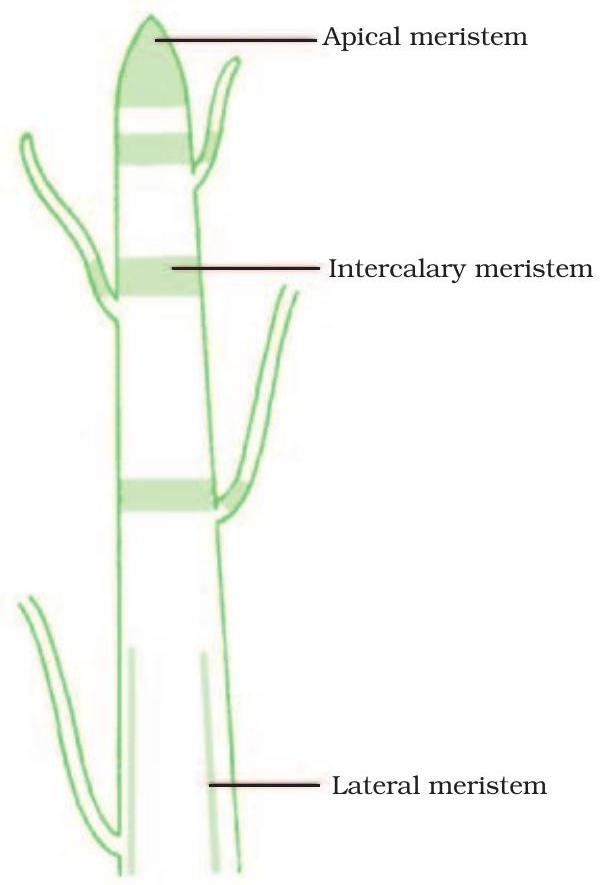
  • Apical meristem – adds length at root and shoot tips.
  • Intercalary meristem – extends internodes at nodes or leaf bases.
  • Lateral meristem – thickens stems and roots.

Spot the Meristems

https://asset.sparkl.ac/pb/sparkl-vector-images/img_ncert/NseavKqclc4dku6rgh6gl5p2PnCtGs8Ntrf2Jgbc.png

Stem diagram with labelled growth zones

Can you locate each growth zone?

Read the diagram carefully. Three tiny meristem areas control length and thickness of the plant.

Key Points:

  • Apical – at very tip; makes stem or root longer.
  • Intercalary – near node/internode; lengthens region between leaves.
  • Lateral – side layers; increases stem thickness.

Simple Tissues Trio
https://asset.sparkl.ac/pb/sparkl-vector-images/img_ncert/XBV4ojqlco4fv1LewopJSwoV2hNLz6Ks7JmuruEJ.png

Simple Permanent Tissues

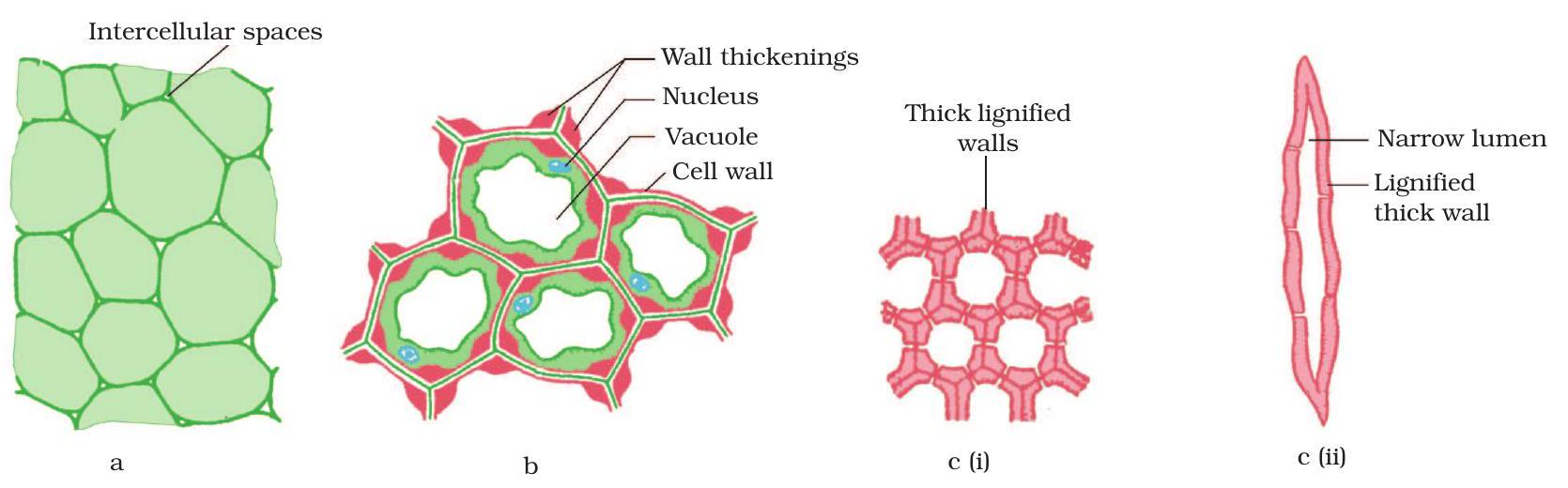
These tissues have similar cells and perform basic storage or support roles in plants.

Key Points:

  • Parenchyma – soft, living cells; stores food and water.
  • Collenchyma – uneven cell walls; flexible support for growing stems.
  • Sclerenchyma – thick, dead walls; very hard, adds strength (coconut husk).

Match Tissue to Role

Drag each tissue to the plant function it performs. Test your memory through active recall.

Draggable Items

Parenchyma
Collenchyma
Sclerenchyma
Apical Meristem

Drop Zones

Stores food

Adds flexibility

Provides hardness

Makes plant longer

Tip:

Remember: meristems drive growth, while mature tissues mainly support or store.

Key Takeaways

Tissues in a nutshell

What is a tissue?

A tissue is a group of similar cells working together for one function.

Two main kinds

Plant tissues are meristematic (dividing) or permanent (mature & specialised).

Meristematic zones

Found at root, shoot, and cambium; they drive length and thickness growth.

Permanent details

Simple: parenchyma, collenchyma, sclerenchyma. Complex: xylem & phloem.