Second Law of Motion Where every push decides the pace.

Multiple Choice Question

Question

You kick a football softly and then kick the same ball harder. What will the harder kick do?

1
Make the ball move faster.
2
Keep the ball still.
3
Make the ball lighter.
4
Change the ball's color.

Hint:

Think about how speed changes when the push becomes stronger.

Momentum

Momentum (p)

Momentum is the product of mass and velocity, \(p = m \times v\). It represents mass in motion and shows how hard an object is to stop.

Second Law Formula

\[F = m \times a\]

Force equals mass multiplied by the acceleration produced.

Variable Definitions

F Force (newton, N)
m Mass (kilogram, kg)
a Acceleration (m/s²)

Applications

Pushing a Cart

Heavier carts need more force to reach the same speed.

Kicking a Football

A stronger kick (greater force) gives the ball faster acceleration.

Force vs Acceleration

Fixed mass (2 kg): force increases linearly with acceleration.
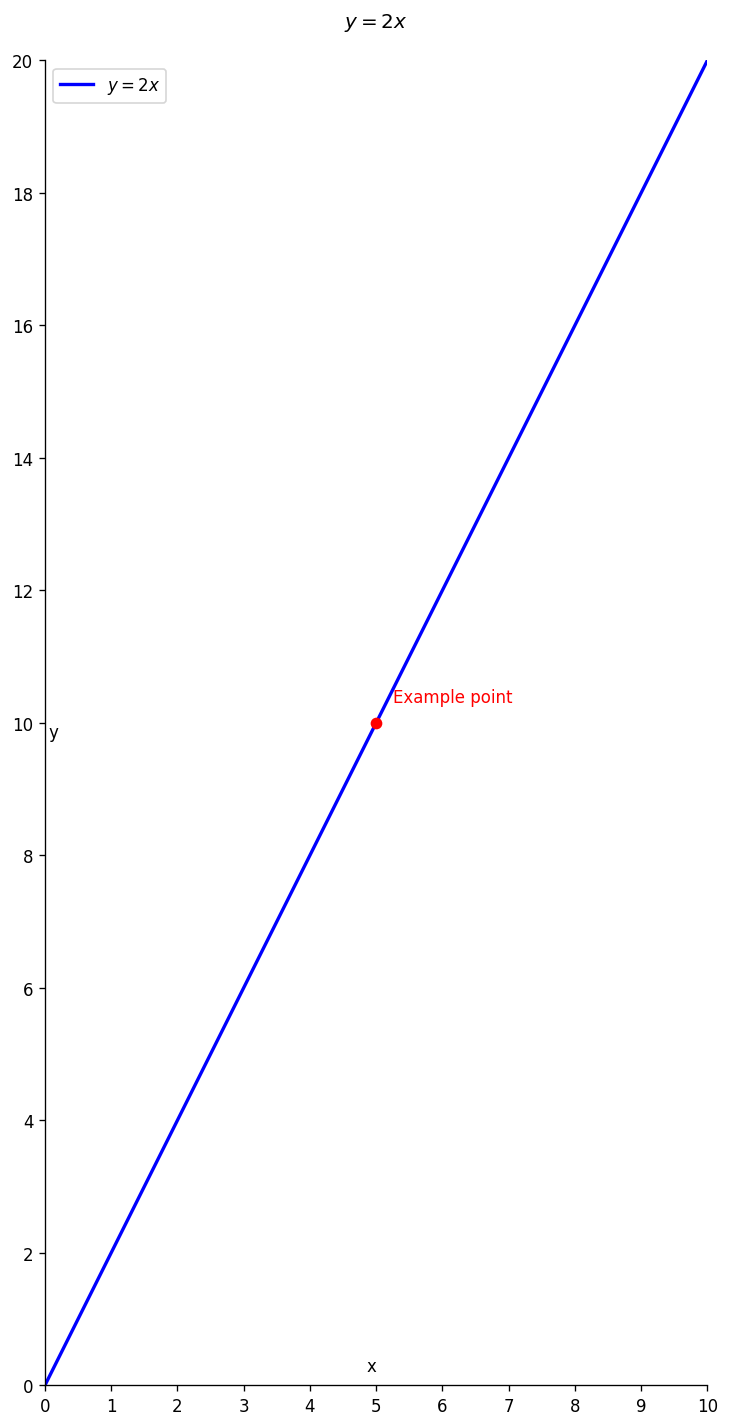
Graph showing a straight line for Force versus Acceleration of a 2 kg body
Graph: straight line through origin, slope = mass (2 kg).

What the graph shows

Linearity means \(F = ma\). Holding mass constant makes force directly proportional to acceleration.

  • Slope of the line is 2 N per m/s² (mass).
  • Acceleration doubles → force doubles (1→2 m/s² gives 2→4 N).
  • Every plotted point obeys \(F = ma\).

Tip: A heavier object shifts the line steeper—same rule, larger slope.

Worked Example

Question: What force is required to give a 3 kg box an acceleration of 2 m/s²?

1

List the data

Mass \(m = 3\,\text{kg}\); acceleration \(a = 2\,\text{m/s}^2\).

2

Recall the law

Second law: \(F = m \times a\).

3

Substitute values

\(F = 3\,\text{kg} \times 2\,\text{m/s}^2\).

4

Calculate force

\(F = 6\,\text{N}\). A 6 newton push is needed.

Pro Tip:

Write units at every step. It shows understanding and prevents calculation slips.

Key Takeaways

Formula

Net force and acceleration link by \(F = m a\).

Momentum View

Force equals rate of change of momentum: \(F = \frac{\Delta p}{\Delta t}\).

More Force

Bigger force → bigger acceleration for the same mass.

More Mass

Heavier mass → smaller acceleration with the same force.