Second Law of Motion Force, mass, and motion collide to create acceleration!

Everyday Push

Term

Force & Mass

Definition

A force is any push or pull that changes motion. Mass shows how heavy an object is; heavier mass needs greater force for the same speed-up.

  • Push or pull
  • Mass = heaviness
  • More mass, less acceleration

Reflect: Which speeds up faster when kicked equally hard—a football or a bowling ball? Explain using force and mass.

Newton’s Second Law

\[F = m a\]

Variable Definitions

F Net force (newton, N)
m Mass of body (kilogram, kg)
a Acceleration produced (m s−2)

Applications

Kick a Football

Stronger kick (larger F) makes the same ball accelerate faster.

Loaded vs Empty Cart

Heavier cart (larger m) needs more force for the same acceleration.

Source: CBSE Grade 9 Science Textbook

Straight-Line Link

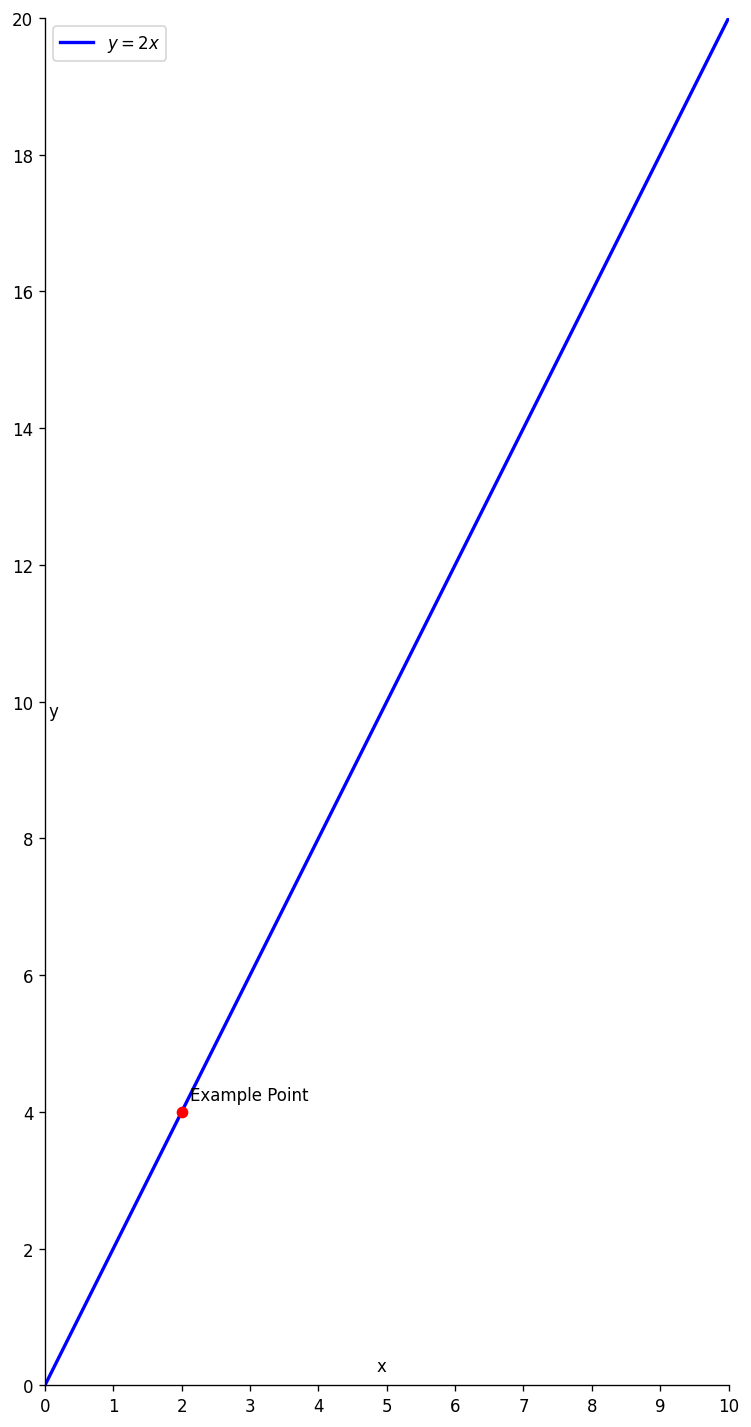
Force vs Acceleration for 2 kg mass

Force (F) vs Acceleration (a) for a 2 kg block

Force grows directly with acceleration

For the fixed mass of 2 kg, doubling the acceleration doubles the required force, giving a straight-line graph that starts at the origin.

Key Points:

  • Graph is a straight line through (0, 0).
  • Slope equals mass: 2 N s² m⁻¹.
  • Shows direct proportionality \(F \propto a\).

Quick Check

Question

A 4 kg box experiences a force of 12 N. What is its acceleration?

1
3 m/s²
2
0.3 m/s²
3
48 m/s²
4
8 m/s²

Hint:

Use a = F ÷ m.

Key Points

Force, mass, and acceleration are linked.

Newton’s Second Law: \(F = m \times a\).

For a fixed mass, acceleration rises with greater force.

Heavier objects need a stronger push to speed up.

Predict motion by simple multiplication or division.

Next Steps

Try solving two textbook problems using \(F = m a\).

Thank You!

We hope you found this lesson informative and engaging.