Acceleration of an object depends directly on the applied force and inversely on its mass. Stronger push speeds it up; heavier load slows acceleration.
Think-pair-share: What happens if force and mass increase at the same time?
Engines expel gas; large mass still accelerates upward.
Brakes apply force to cut the car’s forward acceleration.
Greater force on the ball gives it higher acceleration.
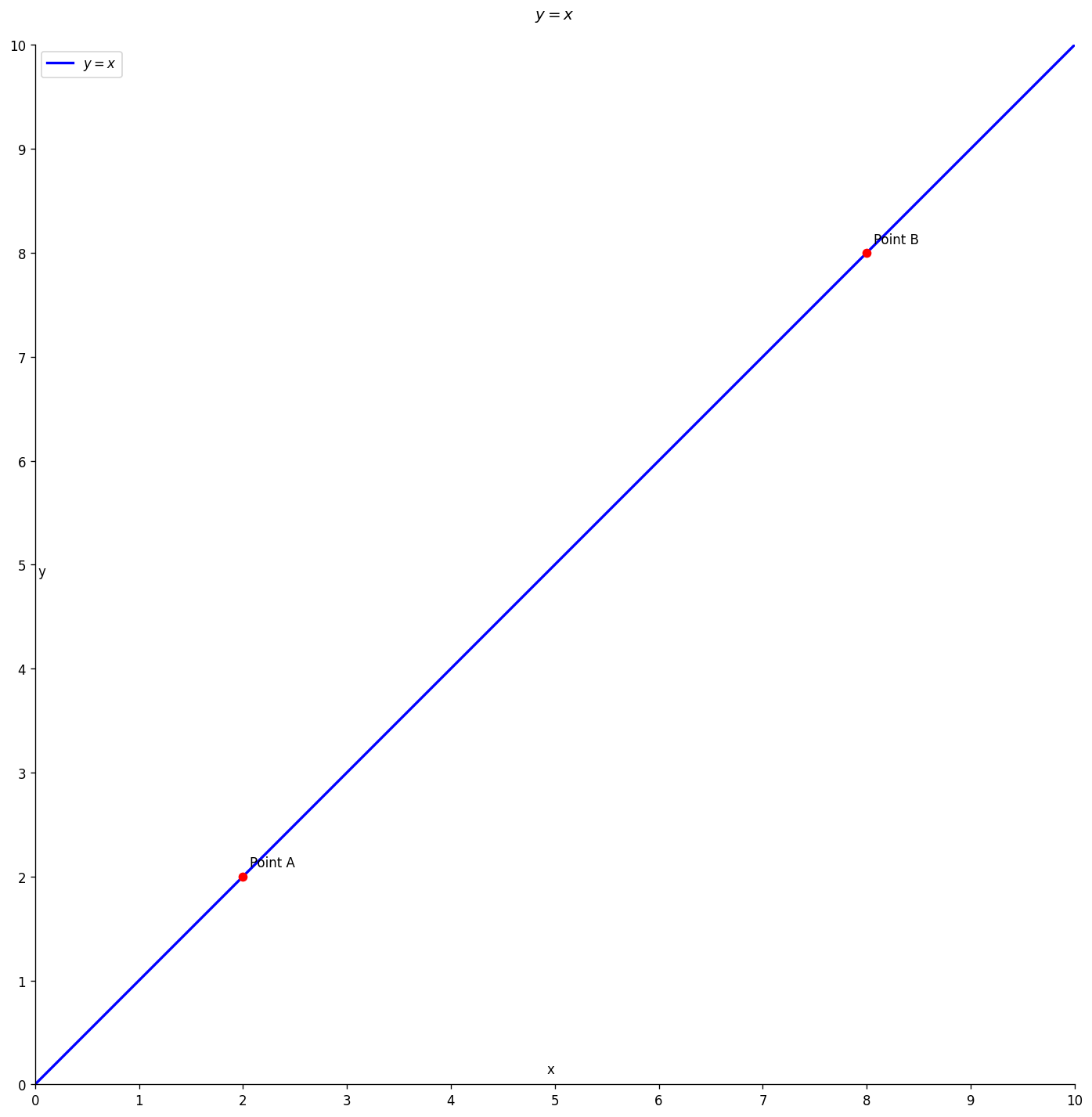
Straight-line graph of force vs acceleration (m = 1 kg)
The graph plots force on the x-axis and acceleration on the y-axis.
A 1 N push gives 1 m/s²; 2 N gives 2 m/s². The straight line through the origin shows a constant slope.
A force of 10 N acts on a 2 kg box. Find its acceleration.
\(F = m \times a\)
\(a = \frac{F}{m}\)
\(a = \frac{10\ \text{N}}{2\ \text{kg}}\)
\(a = 5\ \text{m/s}^2\)
Tip: Always keep units with every number.
If the force on an object is doubled while its mass stays the same, what happens to its acceleration?
Look back at the straight line graph.
Exactly! Acceleration is directly proportional to force.
Not quite. Try recalling the formula a = F/m.
Remember these points
Push harder and the object accelerates faster.
Heavier objects need a bigger push.
A simple multiplication links the three quantities.
Force vs acceleration is a straight line through origin when mass is constant.