Meet the Poet
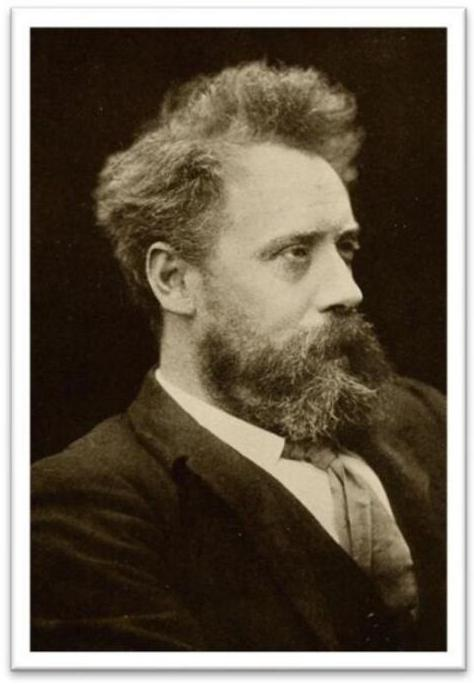
William Ernest Henley (1849–1903)
Henley was a Victorian poet, critic and magazine editor from Gloucester.
Despite chronic illness and amputation, he crafted verses that celebrate inner strength.
Key Facts:
- Born 1849, Gloucester, England
- Victorian poet, critic & editor
- Lost left leg to bone tuberculosis at age 12
- Wrote “Invictus” while awaiting risky surgery
- Model for Long John Silver in Stevenson’s novel
- Poem still inspires resilience worldwide
Historical Context
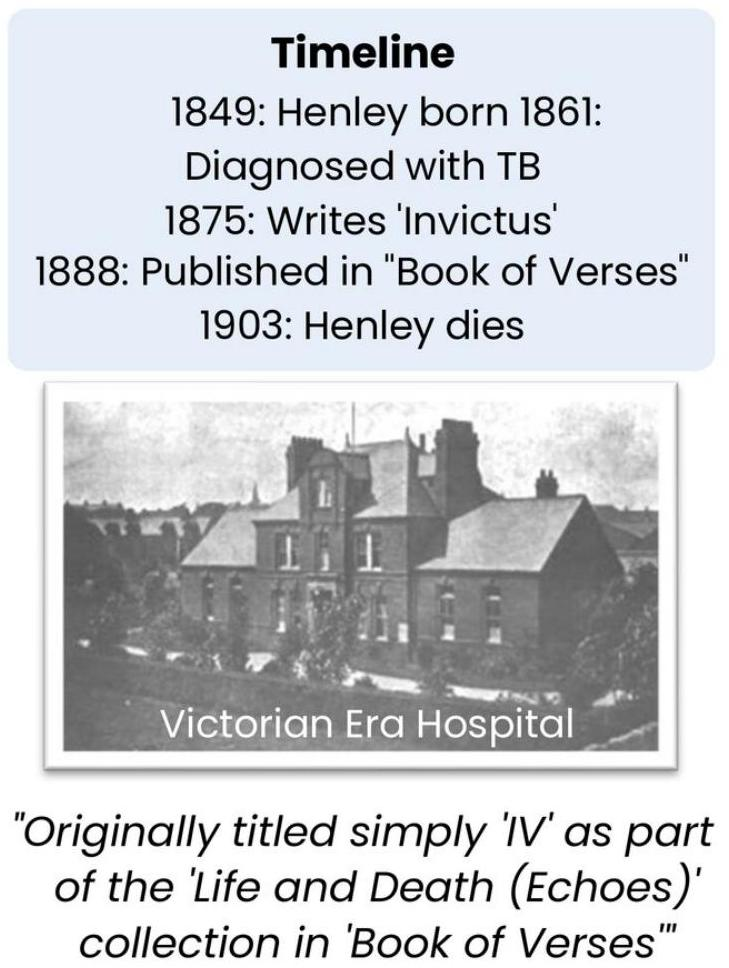
Poem Born in Crisis (1875)
In 1875 William Ernest Henley wrote “Invictus” while confined to the Royal Infirmary, Edinburgh.
He used the poem to declare his resolve against a severe leg infection and looming amputation.
Key Points:
- Victorian era (1837-1901) prized stoic self-discipline amid faith–science debates.
- Medical backdrop: Henley, 24, battled tuberculosis of the bone during surgery.
- Timeline: 1873 infection diagnosed → 1875 poem written → 1891 poem published.
Why It Matters
Main Points
- 1 Literary significance
- 2 Popularity
- 3 Universal impact
- 4 Historical influence
Key Highlights
-
Victorian-era masterpiece of resilience and self-mastery.
-
Lines quoted in speeches, films, and social media worldwide.
-
Theme of unconquerable spirit resonates across cultures and ages.
-
Inspired leaders like Nelson Mandela during imprisonment.
Poem at a Glance
Key message & flow
Core Message
Unbreakable spirit stays resilient against suffering.
Voice
Bold first-person “I” claims full control of destiny.
Tone
Defiant yet hopeful; never surrenders to despair.
Flow
Stanzas 1 – 2 show struggle; 3 – 4 rise to confident triumph.
Theme: Suffering → Strength
Imagery of Suffering
Dark, violent words—“night”, “clutch”, “bludgeon”—paint raw pain.
Instant Resolve
Yet the speaker “has not winced” and stays “unbowed,” showing inner power.
Pattern Across Stanzas
Every stanza repeats pain → defiance, helping us track suffering turning into strength.
Pro Tip:
When reading, note each switch from dark image to bold statement—this maps pain to power.
Free Will vs Fate
External Constraints (Fate)
Inner Freedom (Will)
Key Similarities
Theme: Agnosticism
Agnosticism
Henley is unsure of any god, yet trusts the human soul’s unbeaten strength.
Key Characteristics:
- Uncertainty about God – “Whatever gods may be”.
- Faith in soul – speaker calls it “unconquerable”.
Example:
“Whatever gods may be” contrasts with “my unconquerable soul”, showing the poem’s balanced stance.
Stanza 1 Highlights
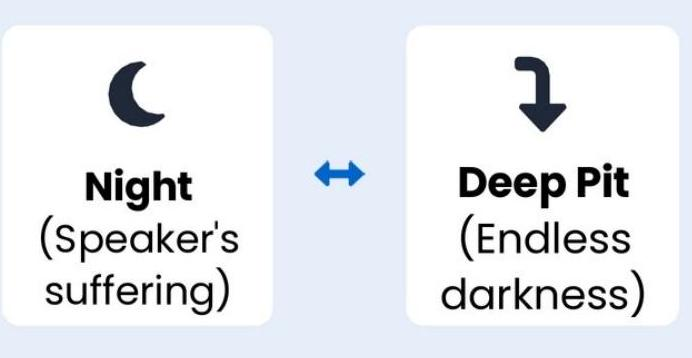
Night — Suffering
“Night” shows a dark, painful period surrounding the speaker.
Pit — Despair
The “pit” suggests a bottomless hole of hopelessness.
Gratitude
He thanks the “whatever gods” for the strength to endure.
Unconquerable Soul
Despite every blow, his soul remains unbeaten and proud.
Reminder
These four images explain how stanza 1 moves from pain to fearless resilience.
Stanza 2 Highlights
Personification
“Clutch of circumstance” makes fate a hand that firmly grips the speaker.
Stoic Response
Though “Chance” beats him, he neither winces nor cries, remaining unbowed.
Pro Tip:
Connect each device to the poem’s fearless tone to nail “identify devices” questions.
Stanza 3 Highlights
The speaker meets death after enduring pain, but his courage stays unshaken.
Wrath & Tears
Past suffering has brought anger and tears, yet the poet refuses to bow.
Horror of Shade
“Shade” personifies death. The speaker stands before it calm and unafraid.
Menace of Years
Time threatens to wear him down, but he keeps his head “unbowed.”
Stanza 4 Highlights
Strait gate
Even a narrow, forbidding gate cannot block my spirit.
Punishment scroll
No list of punishments can frighten me.
Master of my fate
I control the course of my life.
Captain of my soul
I steer my inner world with courage and choice.
Pro Tip:
Memorise the closing lines—exams often ask you to quote them.
Form & Rhyme
Structure & Metre
Invictus has four quatrains, an ABAB rhyme scheme, and steady iambic tetrameter. The regular rhythm underscores the speaker’s self-mastery.
Metaphors
Night · Pit · Captain
Henley turns hardship into pictures: the dark Night, the bottomless Pit, and the self-steered Captain. These images let us feel struggle and control.
Key Characteristics:
- Night – relentless darkness symbolises ongoing adversity.
- Pit – fathomless hole conveys despair and danger.
- Captain – master of the ship stands for self-control and resilience.
Example:
“I am the captain of my soul” — the speaker claims command despite fate.
Personification
Personification
Giving an idea, object, or force human qualities or actions so we react to it like a person.
Key Characteristics:
- “Night covers” – night acts like a smothering foe.
- “Clutch of circumstance” – circumstance grips like hands.
- “Bludgeonings of chance” – chance beats like an attacker.
Example:
Henley turns these forces into enemies, letting the speaker show courage by defying them.
Imagery
Imagery
Imagery uses vivid language to appeal to our senses. It helps us see, feel, and share the poem’s emotions.
Key Characteristics:
- Visual — dark sky and stars paint clear pictures.
- Tactile — “fell clutch” evokes crushing pressure.
- Emotional impact — images mirror despair and hard-won triumph.
Example:
“Black as the Pit from pole to pole” — a stark visual of total darkness.
Sound & Simile
Listen for the Music of Words
Sound patterns and a vivid comparison make Henley’s lines unforgettable.
Key Points:
- Alliteration – “pit from pole to pole”: repeating /p/ stresses the endless void.
- Consonance – “bloody but unbowed”: /b/ recurs, sharpening the poet’s resolve.
- Assonance – long “o” links bloody–unbowed, creating mournful resonance.
- Simile – night “like the pit from pole to pole” paints total, bottomless darkness.