Invictus Unbowed, Unbroken.

Meet the Poet

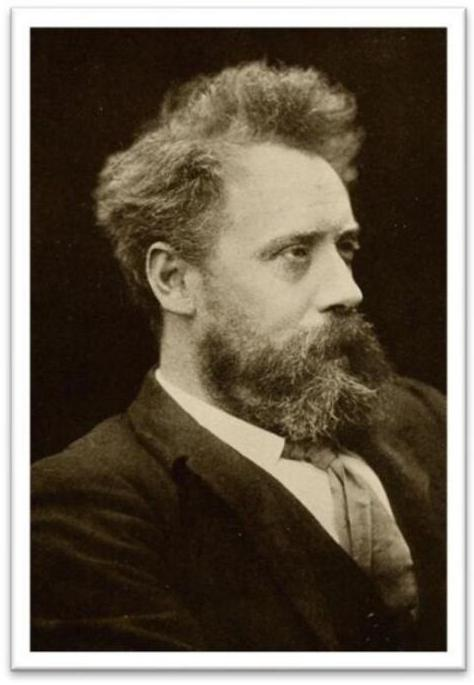
William Ernest Henley photo

William Ernest Henley (1849–1903)

Henley’s fierce will to live shines through his poem “Invictus”.

Key Points:

  • Born in 1849, Gloucester, England.
  • Lost his left leg to bone tuberculosis at 12.
  • Wrote “Invictus” while in hospital, saving the other leg.
  • Personal struggle shaped the poem’s message of courage.

Time & Setting
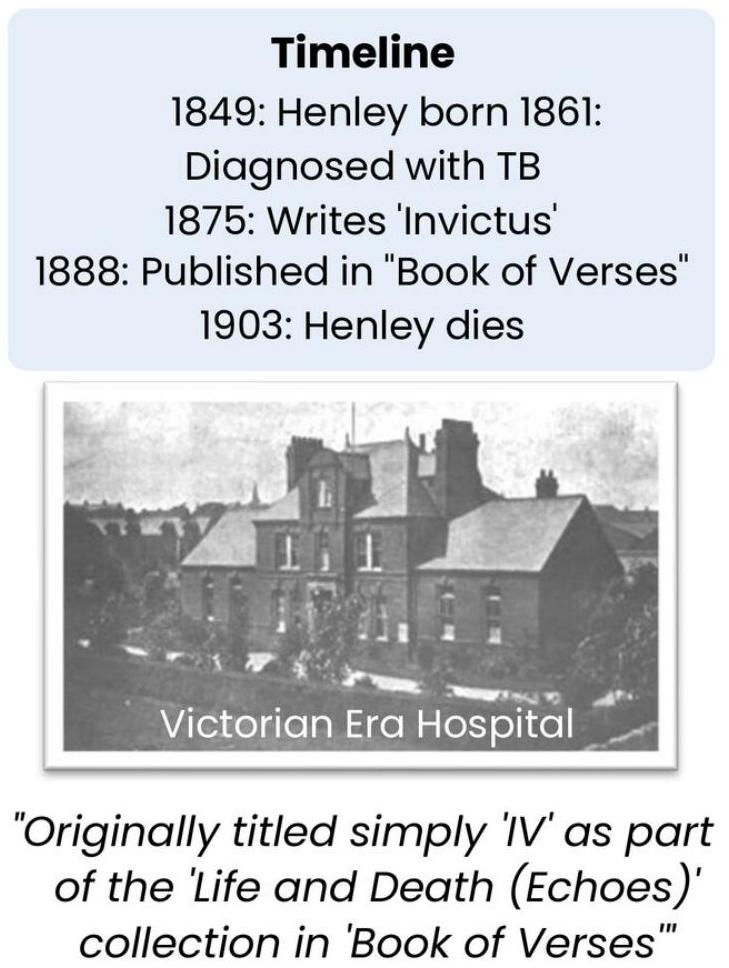
https://asset.sparkl.ac/pb/sparkl-vector-images/img_ncert/vSEwudkzBb0I7L8QqABnqeK3Zi6TLRNcEYhIgDk9.png

Historical Context

Understanding when and why Henley penned “Invictus” helps explain its message of self-mastery.

Key Points:

  • Written in 1875 while Henley was hospitalised in Edinburgh.
  • He faced tuberculosis of the bone and possible leg amputation.
  • Victorian Britain admired courage, duty, and self-discipline.
  • These pressures shaped his vow: “I am the master of my fate.”

Core Message

Resilience

Unbreakable spirit—continuing to fight when life feels painful and dark.

Henley thanks “whatever gods may be” for his “unconquerable soul,” showing indomitable courage.

A Dark Simile

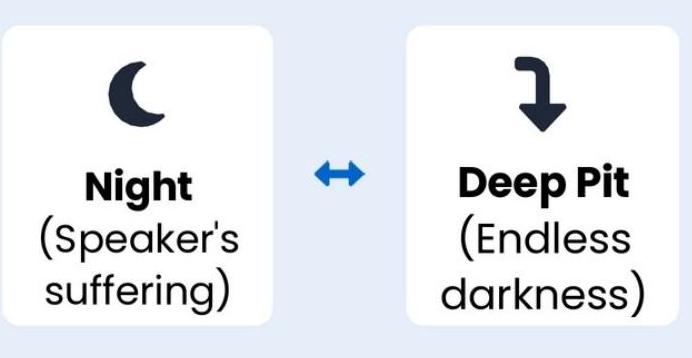
Black as the pit simile illustration

Meaning of “Black as the pit”

A simile directly compares two things using “as” or “like”.

“Black as the pit” turns the poet’s night of pain into a deep, endless hole, showing how overwhelming it feels.

Key Points:

  • Simile = comparison with “as” or “like”.
  • Pit suggests great depth and no escape.
  • Highlights the total darkness of Henley’s suffering.

Fate vs Free Will

Fate (External Forces)

“Night” symbolises overwhelming hardship.
“Bludgeonings of chance” show random suffering.
Events lie outside the speaker’s control.

Free Will (Inner Mastery)

“I am the master of my fate” asserts choice.
Mind remains “unconquerable” despite pain.
Courage lets the speaker stand “unafraid.”

Key Similarities

Both themes shape human response to hardship.
Their tension drives the poem’s central message.

Check Your Ear

Question

Identify the rhyme scheme of the first stanza of “Invictus.”

1
A) AABB
2
B) ABAB
3
C) ABCB
4
D) ABBA

Hint:

Compare the ending words: night / plight and soul / goal.

Match Devices

Drag each literary device onto the quotation it matches to practice identifying literary devices.

Draggable Items

Metaphor
Simile
Personification

Drop Zones

“My head is bloody, but unbowed.”

“Black as the pit from pole to pole.”

“In the fell clutch of circumstance.”

Tip:

Focus on the image or comparison in each line to spot the device quickly.

Key Takeaways

Born from Struggle

Henley’s illness sparked verses that radiate unyielding spirit.

Resilience Defined

The speaker refuses to break, whatever pain or fate delivers.

Stark Imagery

Night and pit symbols underline the depth of hardship.

Marching Rhythm

ABAB rhyme drives a steady, forward beat like marching feet.

Claiming Free Will

“I am the master of my fate” proclaims total self-command.