Genes & Evolution Unlock the code that shapes every living story.

Gene = Trait Code

Gene

A gene is a tiny segment of DNA that controls one trait, e.g., eye colour.

Remember: Gene = trait code stored in DNA.

Alleles Make Variety

Allele

A specific version of the same gene that can produce alternate traits.

Key Characteristics:

  • Alleles occur in pairs, one from each parent.
  • Dominant allele (capital letter) masks the other.
  • Recessive allele (small letter) shows only when dominant is absent.

Example:

Tall (T) vs dwarf (t). Cross TT × tt → all F1 plants Tall (Tt); dominant T is expressed.

Mendel’s Single-Gene Test

Follow each step of the monohybrid cross and notice the 3 : 1 phenotype ratio.

1

Parent (P) Generation

Pure Tall \(TT\) × pure Dwarf \(tt\).

2

F1 Generation

All offspring Tall \(Tt\); Tall trait is dominant.

3

Self-cross

F1 plants self-pollinate: \(Tt × Tt\).

4

F2 Phenotype Ratio

Result: 3 Tall : 1 Dwarf — hallmark monohybrid ratio.

Pro Tip:

A 3 : 1 F2 ratio reveals a single gene with complete dominance.

Linked Genes Move Together
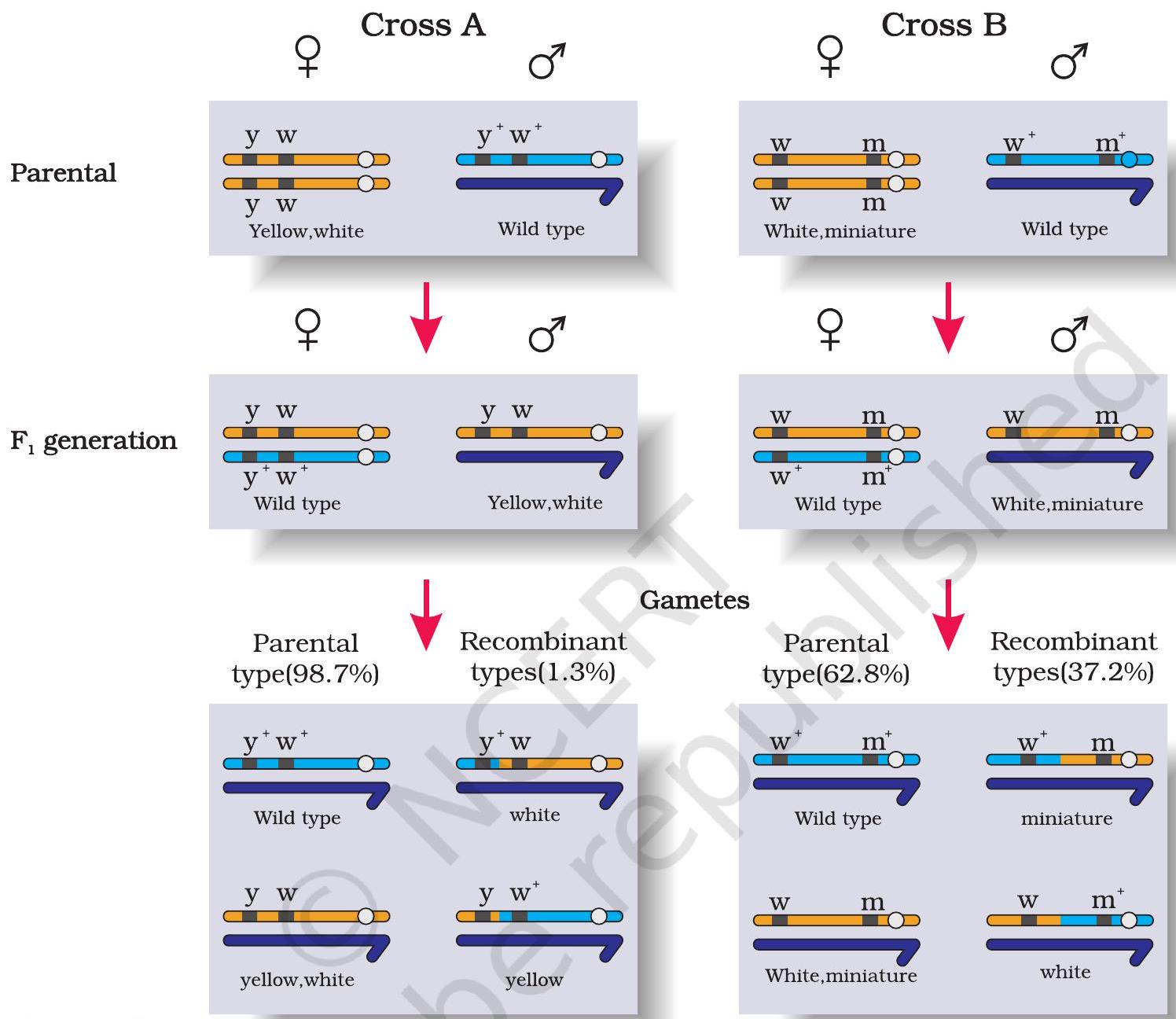
Drosophila linkage diagram

Figure: Yellow body & white eye genes pass together in most offspring.

Concept of Linkage

Linkage means genes placed close on the same chromosome usually pass to the next generation together.

Morgan saw yellow body (y) and white eyes (w) stay together in 98.7 % of flies; only 1.3 % were recombinants.

Key Points:

  • Linked genes travel as a pair during meiosis.
  • Parental types vastly outnumber recombinants.
  • Closer genes ⇒ fewer crossovers.

Check-in: Linkage

Question

If two genes show 1 % recombination frequency, they are ____.

A
far apart
B
tightly linked
C
on different chromosomes
D
unlinked

Hint:

Lower recombination % means the genes sit very close on one chromosome.

Mutation Shows Up

https://asset.sparkl.ac/pb/sparkl-vector-images/img_ncert/C4UWowDgl8umYbQ1tDYLUMNpP84uswAKclWUnH8o.png

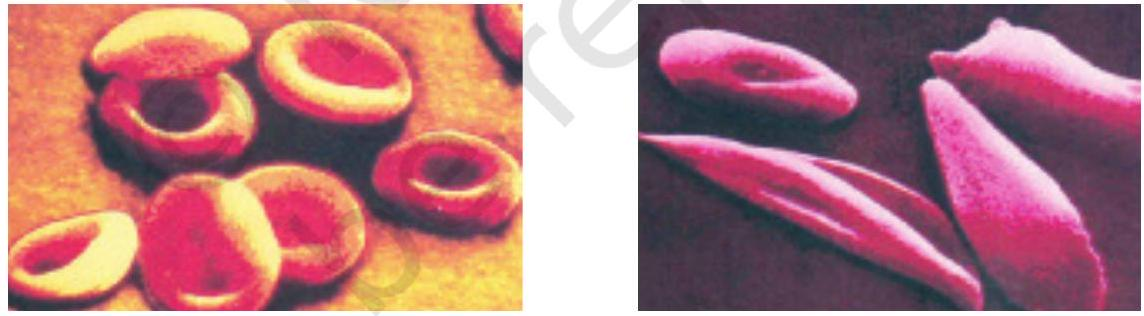
Sickle-cell example

Mutation is any change in the DNA sequence.

In sickle-cell anaemia, one base swap (A → T) in the β-globin gene occurs.

Key Points:

  • DNA change: A → T at one spot.
  • Protein change: Glu → Val in haemoglobin.
  • Cell change: Disc-shaped RBC → Sickle-shaped RBC.
  • Tiny DNA change causes a clear visible trait.

From DNA to Disease
https://asset.sparkl.ac/pb/sparkl-vector-images/img_ncert/OQ8jWYZMC7mXy4UReVF1pnJZUxgHe2cWQGv6Ga1B.png

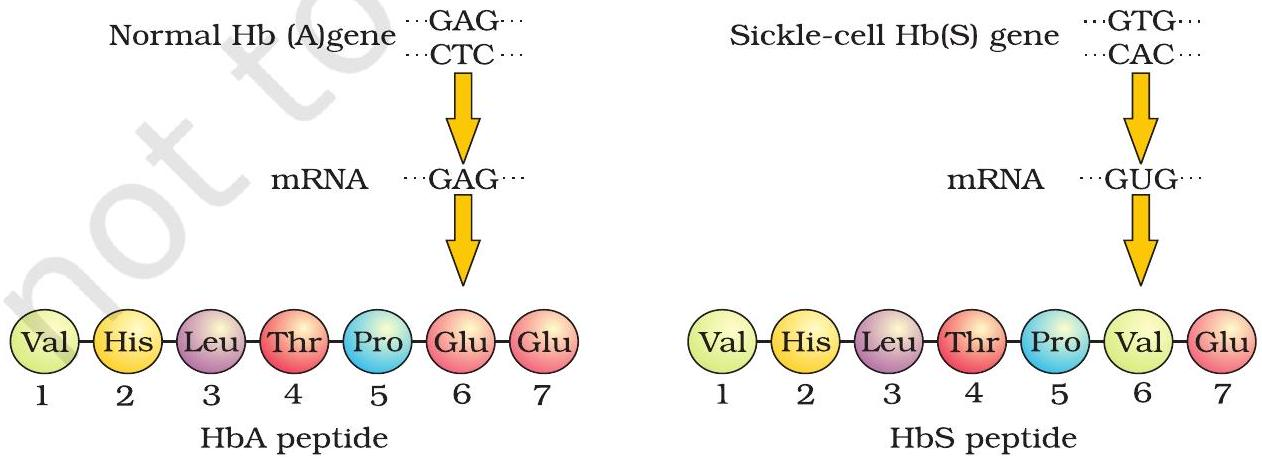
DNA point mutation GAG→GUG in β-globin gene

One Point Mutation, Big Effect

A single point mutation changes the DNA codon GAG to GUG.

This replaces Glutamic acid with Valine in the β-chain of haemoglobin, producing sickle-shaped red blood cells.

Key Points:

  • Point mutation = single base change.
  • DNA: GAG (Glu) → GUG (Val).
  • Valine makes β-globin stick, distorting RBCs.
  • Distorted cells cause sickle-cell anaemia.

Key Takeaways

You’ve met the basics!

Hover on any icon to replay that mini-segment.

Genes = DNA Units

Genes are DNA sections that carry instructions for traits.

Alleles Bring Variety

Different versions of a gene (alleles) create visible differences among individuals.

Mendel’s Laws Guide Inheritance

Segregation and independent assortment predict how alleles pass to offspring.

Variation Arises by Change

Mutation and crossing-over introduce new allele combinations into populations.

Evolution Favors Advantage

Natural selection retains alleles that improve survival, driving long-term change.