Shapes & Styles
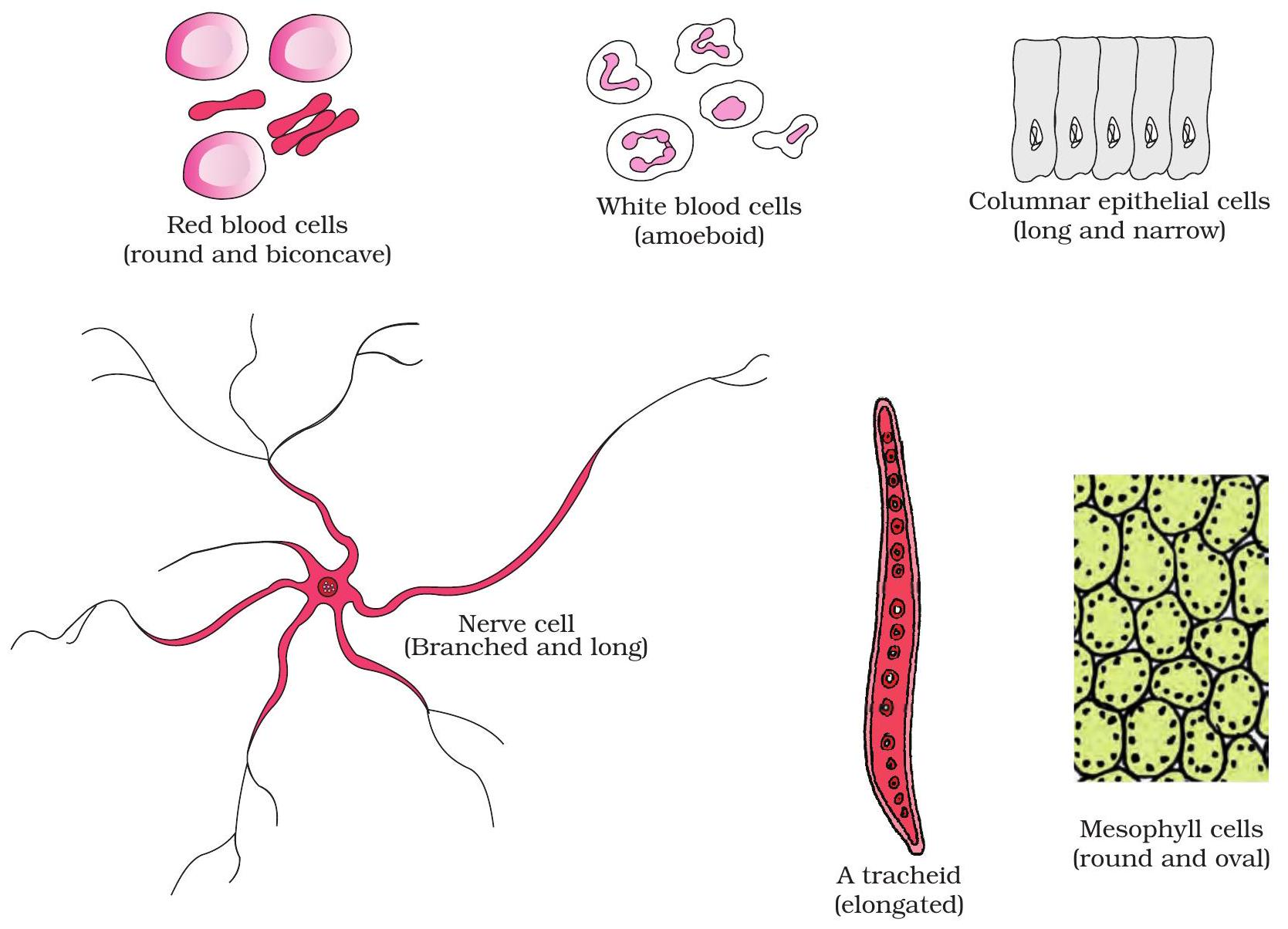
Form Mirrors Function
Cells span from 0.2 µm bacteria to metre-long neurons, covering the full size range of life.
Their diverse shapes—discs, branches, cubes—are tailored to specific tasks, linking morphology to function.
Key Points:
- Biconcave RBC (~7 µm) squeezes through capillaries for rapid gas exchange.
- Axonal neuron (>1 m) conducts impulses across the body efficiently.
- Cuboidal kidney cell packs tightly, optimising absorption and secretion.
Sizing Up Life
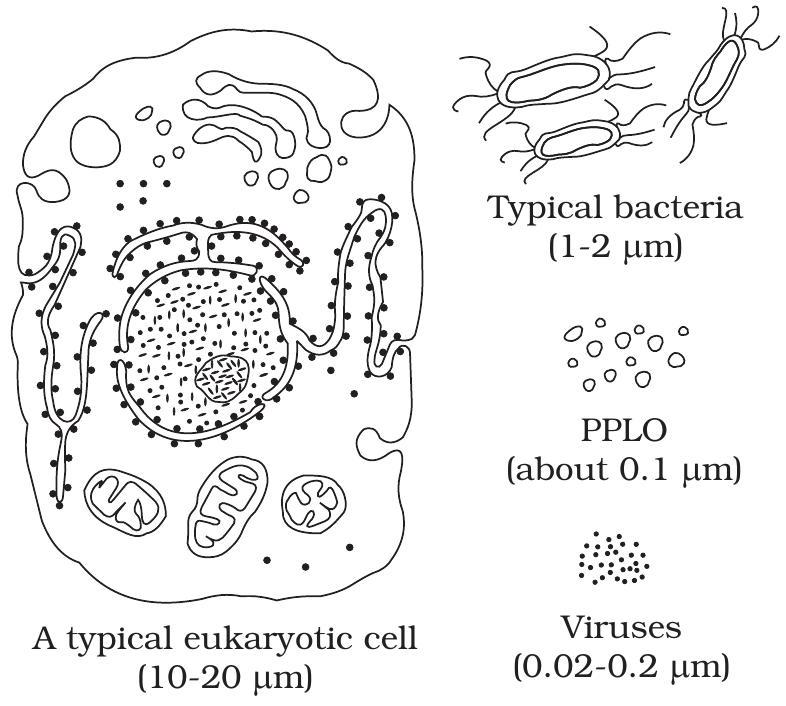
Log-scale diagram: virus → bacterium → eukaryotic cell
Nanometres vs Micrometres
Distances shrink fast on a log scale: 1 μm equals 1 000 nm.
Viruses (20–300 nm) are dwarfed by bacteria (0.5–5 μm), which are again outsized by eukaryotic cells (10–100 μm).
Key Points:
- Virus diameter: 20–300 nm
- Bacterium length: 0.5–5 μm (500–5 000 nm)
- Eukaryotic cell diameter: 10–100 μm
- Each jump ≈ 10–100×; size shapes metabolism and replication
Plant vs Animal
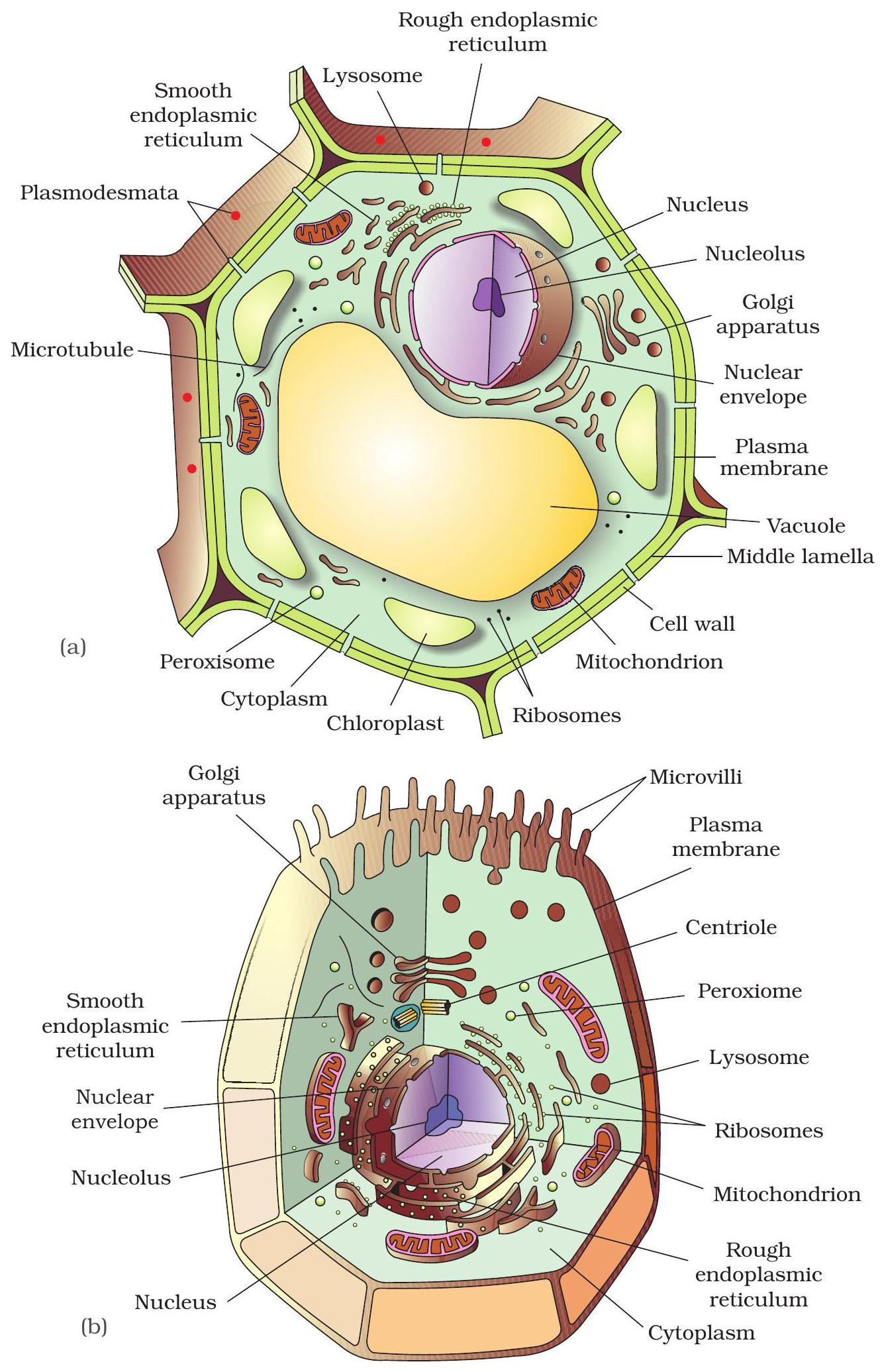
Unique Organelles
Plant cells possess a robust cell wall and light-capturing chloroplasts.
Animal cells lack these, but contain centrioles that guide cell division.
Key Points:
- Cell wall – rigid cellulose layer; only in plants.
- Chloroplasts – perform photosynthesis; only in plants.
- Centrioles – organise spindle fibres; only in animals.
Fluid Mosaic Magic
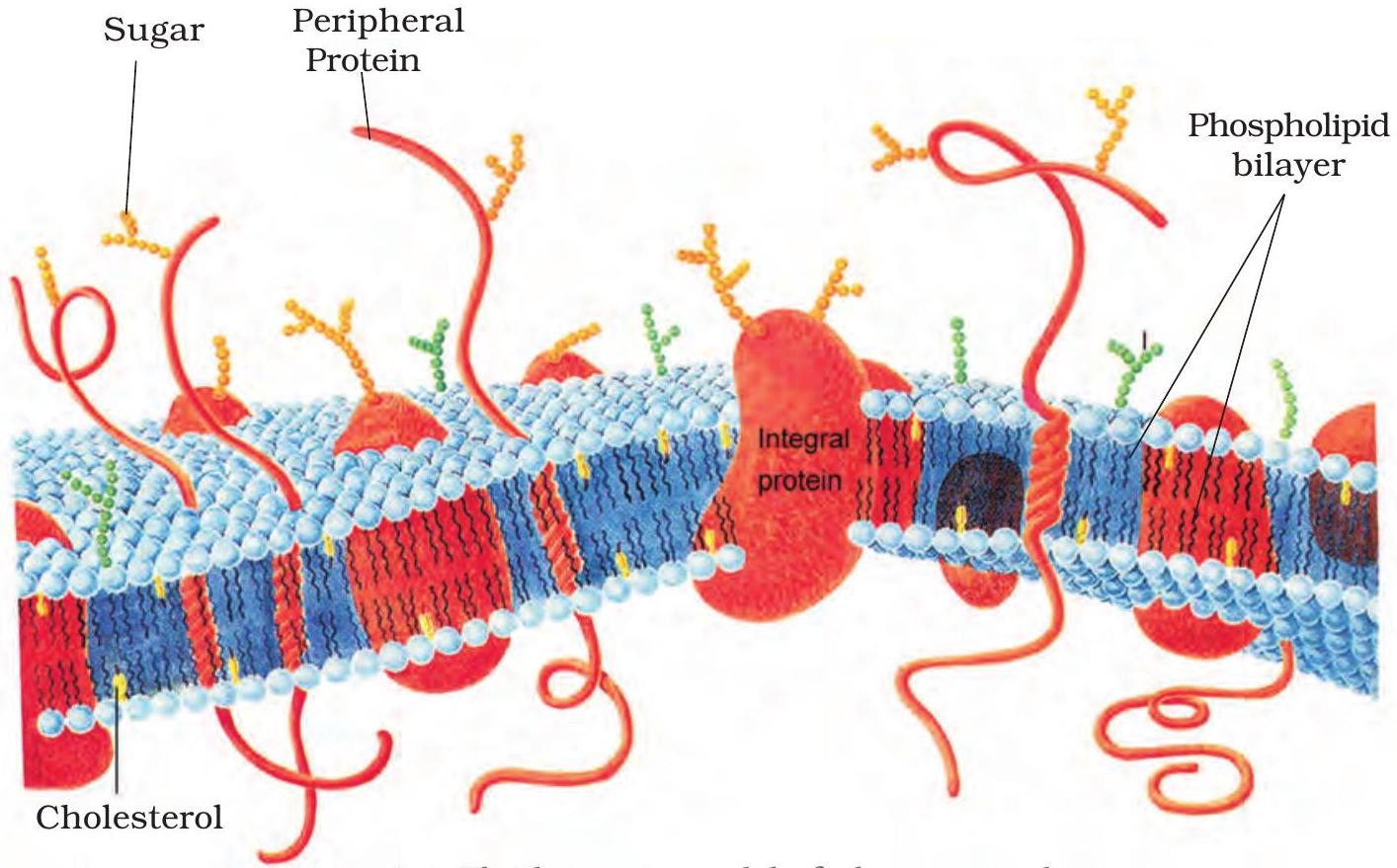
Plasma Membrane: Fluid Mosaic Model
Two layers of amphipathic phospholipids form a flexible sheet; hydrophobic tails meet inside, hydrophilic heads face water.
Integral proteins span the bilayer and create pathways, while peripheral proteins loosely attach on surfaces for signalling or support.
Fluid mosaic organization keeps plasma membrane flexible and selectively permeable.
Key Points:
- Phospholipids move laterally, creating a fluid background.
- Integral proteins span the sheet; peripheral proteins cling to one side.
- Predict: Adding cholesterol in cold conditions—increase, decrease, or no change?