Cell Shapes Gallery
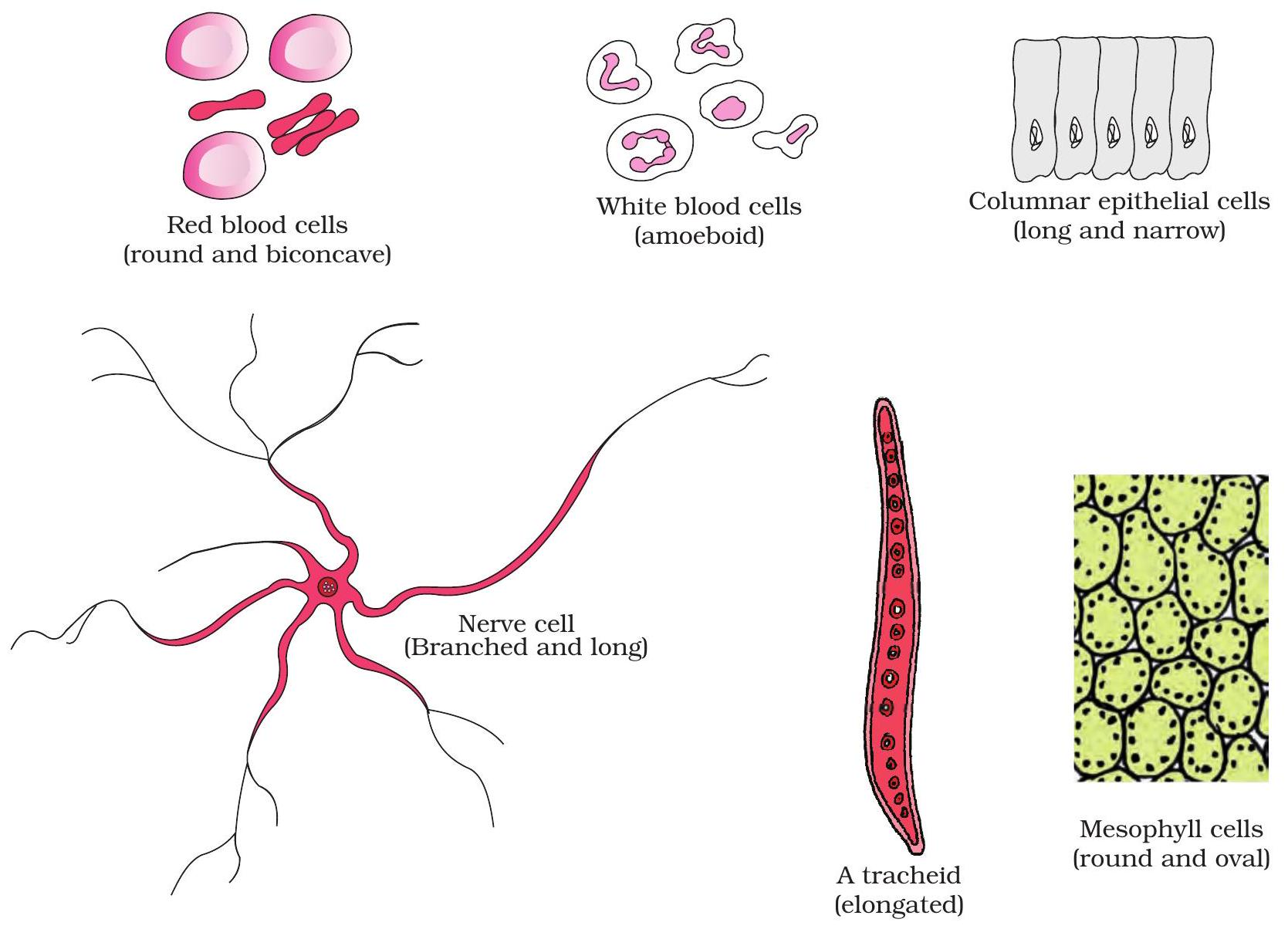
Hover over each drawing to reveal its name.
Shape Mirrors Function
Cells exhibit remarkable morphology diversity; each form is optimised for specific tasks.
Biconcave RBCs maximise gas exchange, whereas branching neurons extend reach for rapid signalling.
Consider how geometry modulates nutrient flow, diffusion distance, or signal speed.
Key Points:
- Disc-shaped RBC: large surface area, swift O₂ exchange.
- Long axon neuron: rapid electrical conduction over distance.
- Microvilli cell: expanded membrane for nutrient absorption.
Sizing Up Cells
Scale at a Glance
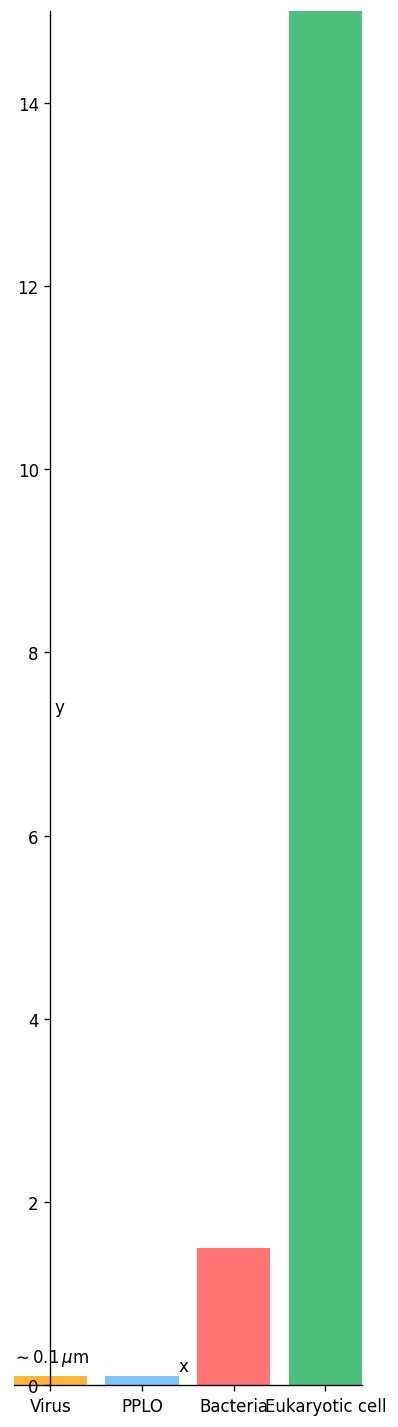
Biological structures cover a vast scale, from nanometres to millimetres.
A typical virus (~100 nm) is about 150 times smaller than an average human cell (~15 µm).
Such scale differences require microscopes with matching resolution.
Key Points:
- Virus: ~0.1 µm diameter.
- Human cell: ~15 µm diameter.
- Light microscopes resolve ≈0.2 µm; electron microscopes ≈0.2 nm.
Plant vs Animal Cells
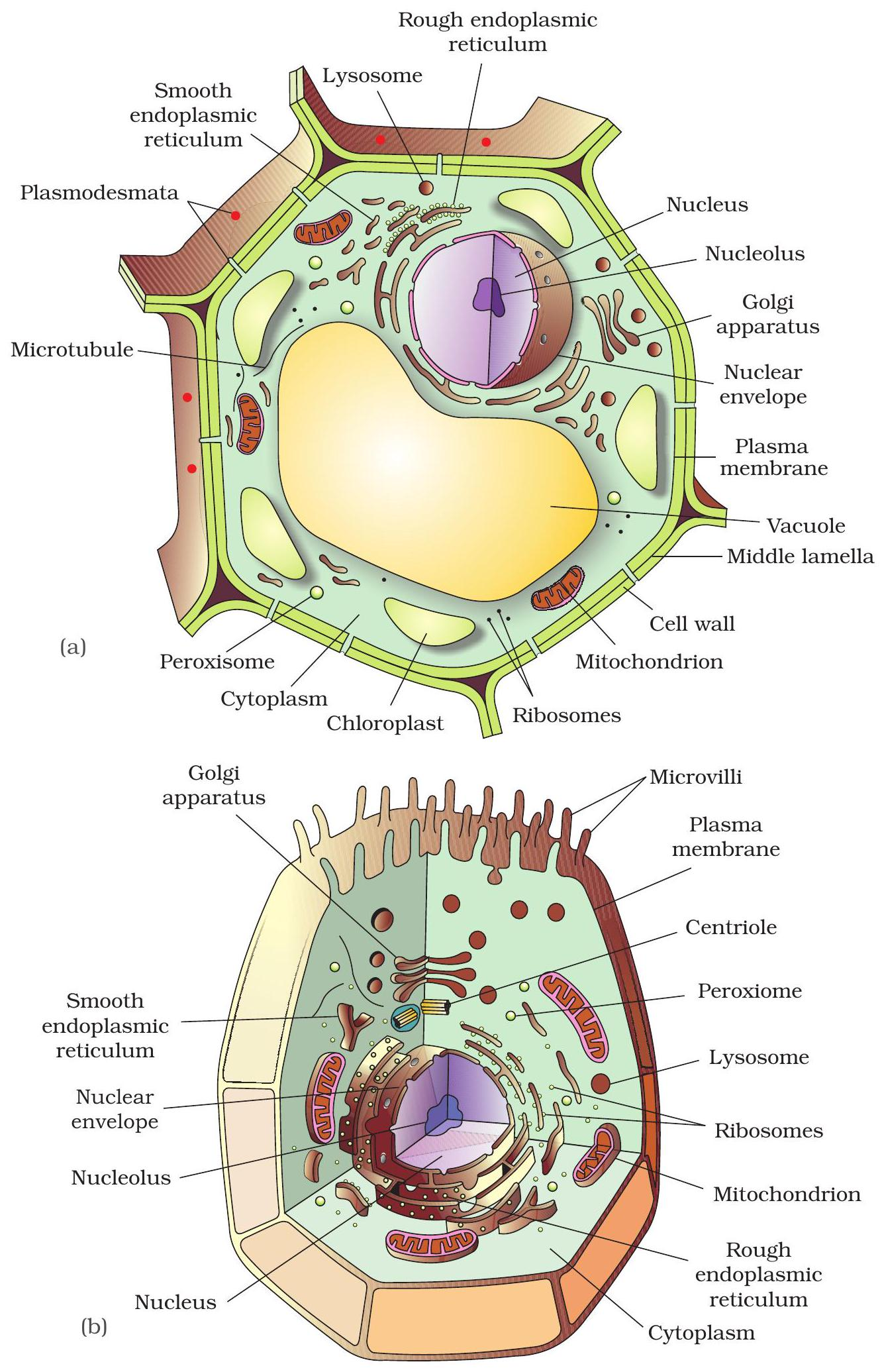
Unique organelles in two kingdoms
Kingdom Plantae cells thrive as autotrophs due to extra structures absent in Animalia.
Animal cells trade photosynthesis for rapid division, using organelles plants lack.
Key Points:
- Cell wall (Plantae) – rigid cellulose layer for shape and protection.
- Chloroplast (Plantae) – converts light into glucose via photosynthesis.
- Large central vacuole (Plantae) – stores water, maintains turgor pressure.
- Centrioles (Animalia) – organise spindle fibres for mitosis.
Fluid Mosaic Membrane
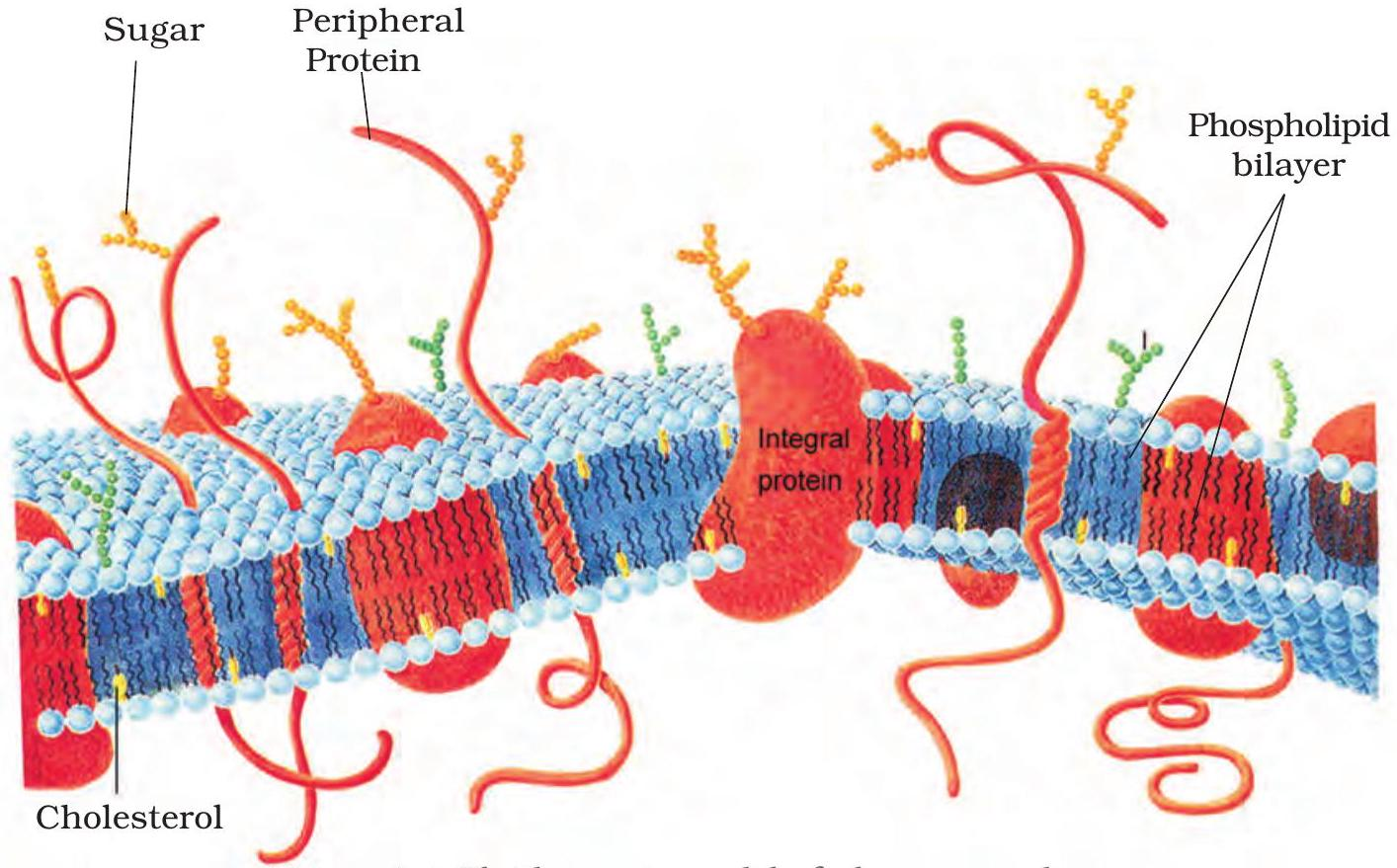
Structure drives both stability and motion
Phospholipids self-assemble into a bilayer; their hydrophobic tails face inward, forming a water-tight, stable barrier.
Within this bilayer, lipids drift laterally and proteins float like movable piers, giving the membrane its fluid nature.
Key Points:
- Cholesterol slips between phospholipids—loosen packing at low °C, stiffen at high °C.
- Fluidity enables endocytosis, exocytosis and rapid signal complex formation.
- Non-covalent hydrophobic forces hold the bilayer together, keeping it stable while allowing lateral movement.