Cell Diversity
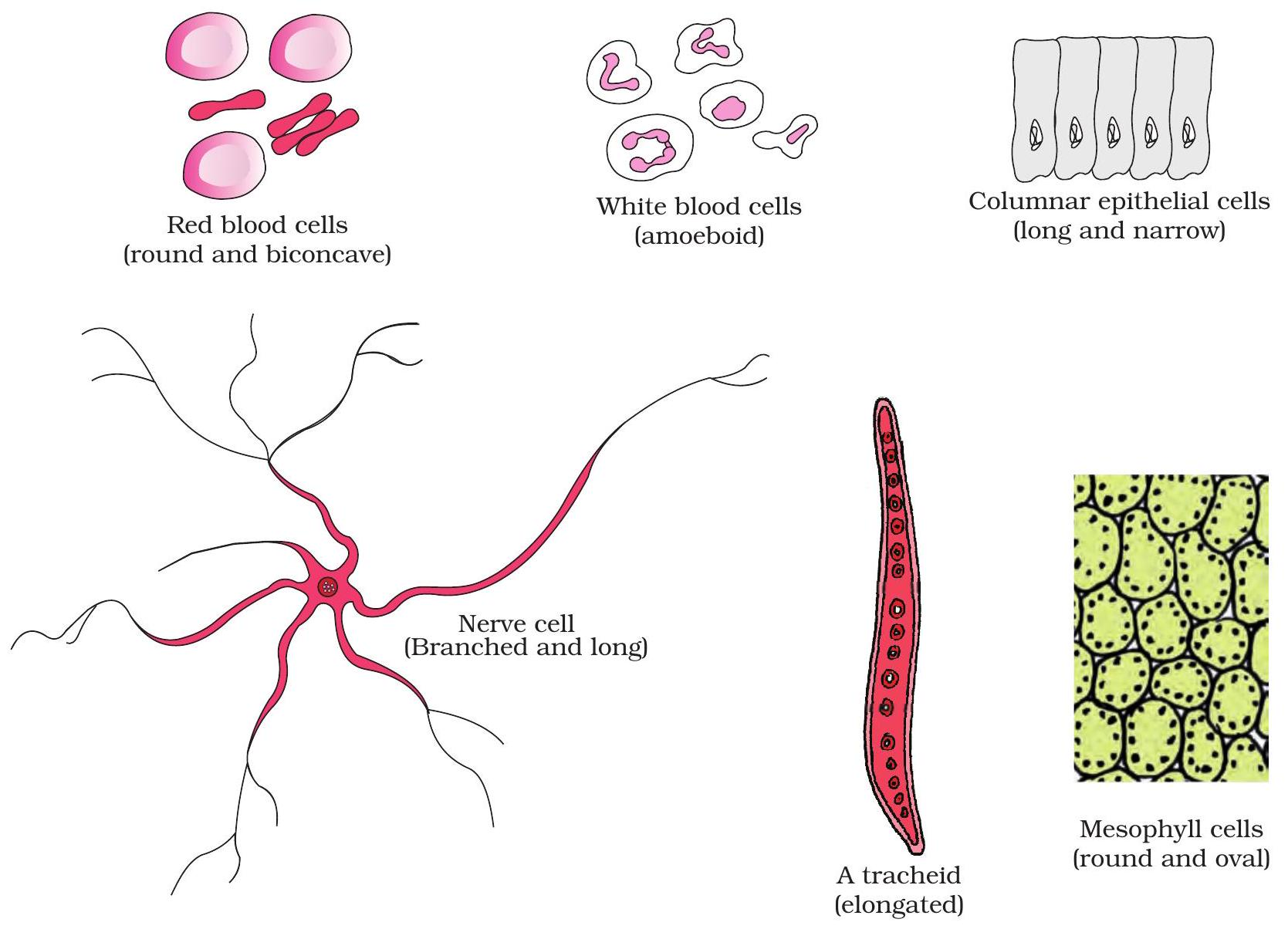
Figure: Variety of cell shapes in plants and animals
Form Follows Function
Each cell shape is specialised to optimise its task.
Drag every label onto the matching silhouette to prove that shape reveals function.
Key Examples:
- RBC – biconcave disc; large surface area speeds O₂ exchange.
- WBC – flexible amoeboid; squeezes through tissues to fight germs.
- Nerve cell – long axon; rapid electrical transmission.
- Tracheid – elongated tube; water climbs in xylem.
- Columnar epithelium – tall columns; absorbs and protects lining.
- Mesophyll cell – irregular with chloroplasts; maximises light capture in leaves.
Two Cellular Worlds
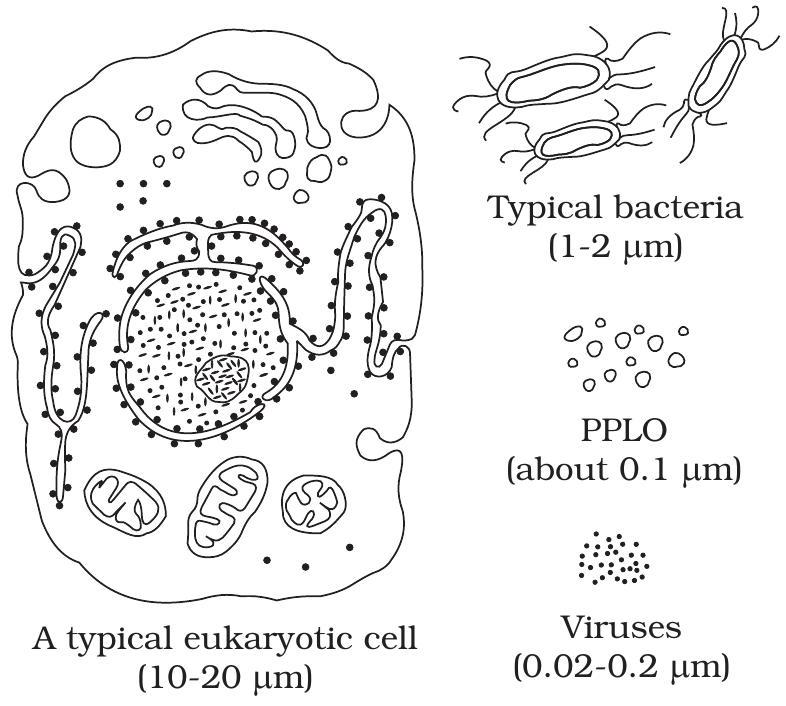
Prokaryote vs Eukaryote
Eukaryotes are 10–100 µm and packed with membrane-bound organelles that separate tasks.
Prokaryotes stay small at 0.1–5 µm, lack organelles, and run all reactions in an open cytoplasm.
Their compact genome lets bacteria copy DNA swiftly, giving them faster division rates.
Key Points:
- Size: Prokaryote < Eukaryote, roughly one order of magnitude.
- Structure: Organelles create compartmentalisation only in eukaryotes.
- Quiz → Faster bacterial growth mainly stems from their compact genome.
Plant vs Animal Cells
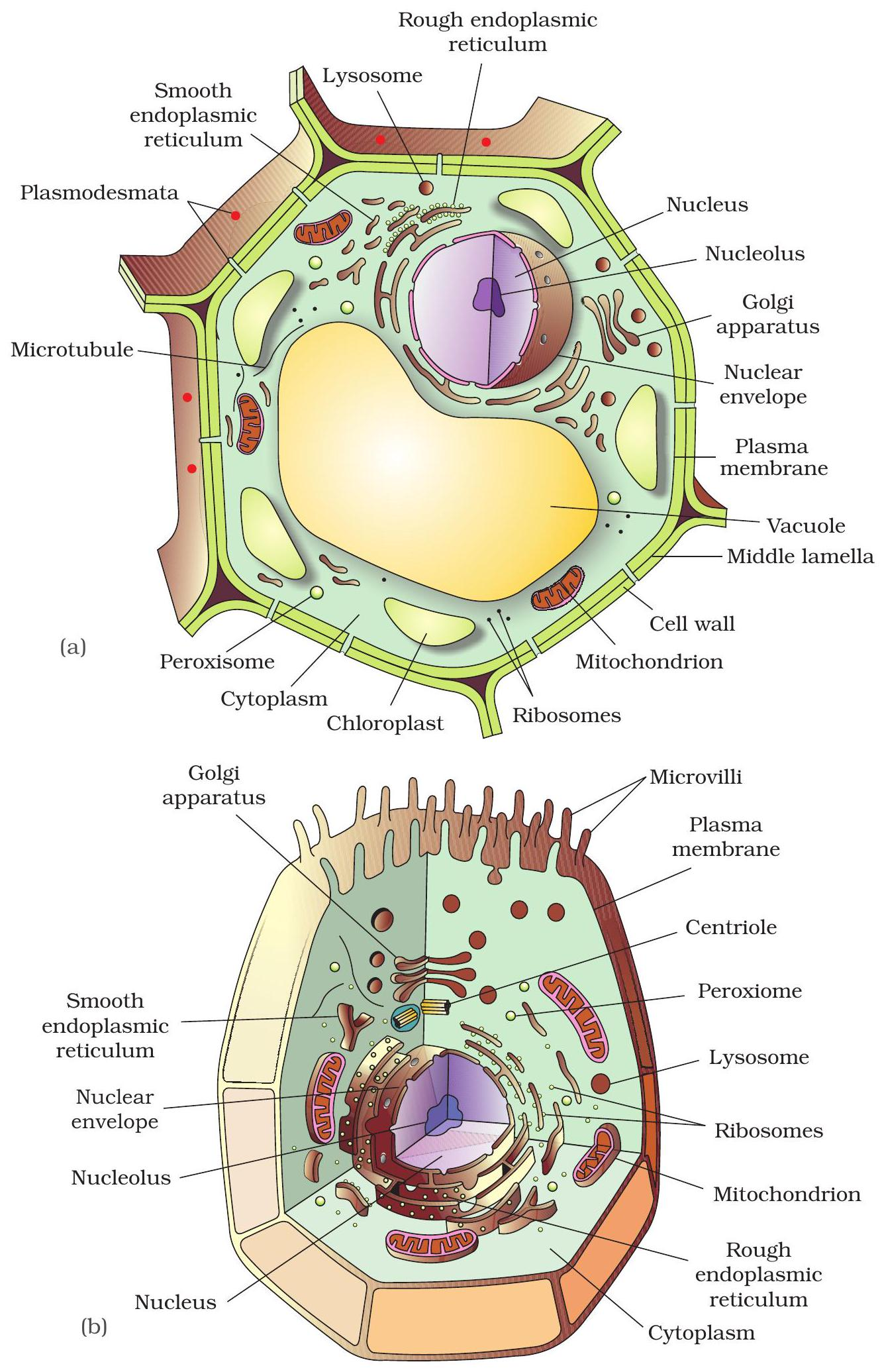
Distinct Organelles
Plant cells possess a sturdy cellulose cell wall that maintains shape and prevents bursting.
Chloroplasts in plant cells trap light energy to build food through photosynthesis.
Animal cells carry centrioles, microtubule cylinders that organize the spindle during division.
Key Points:
- Cell wall: rigid support in plants; absent in animals.
- Chloroplast: photosynthesis engine of plant cells.
- Centrioles: spindle organizers unique to animal cells.
Chromosome Geometry
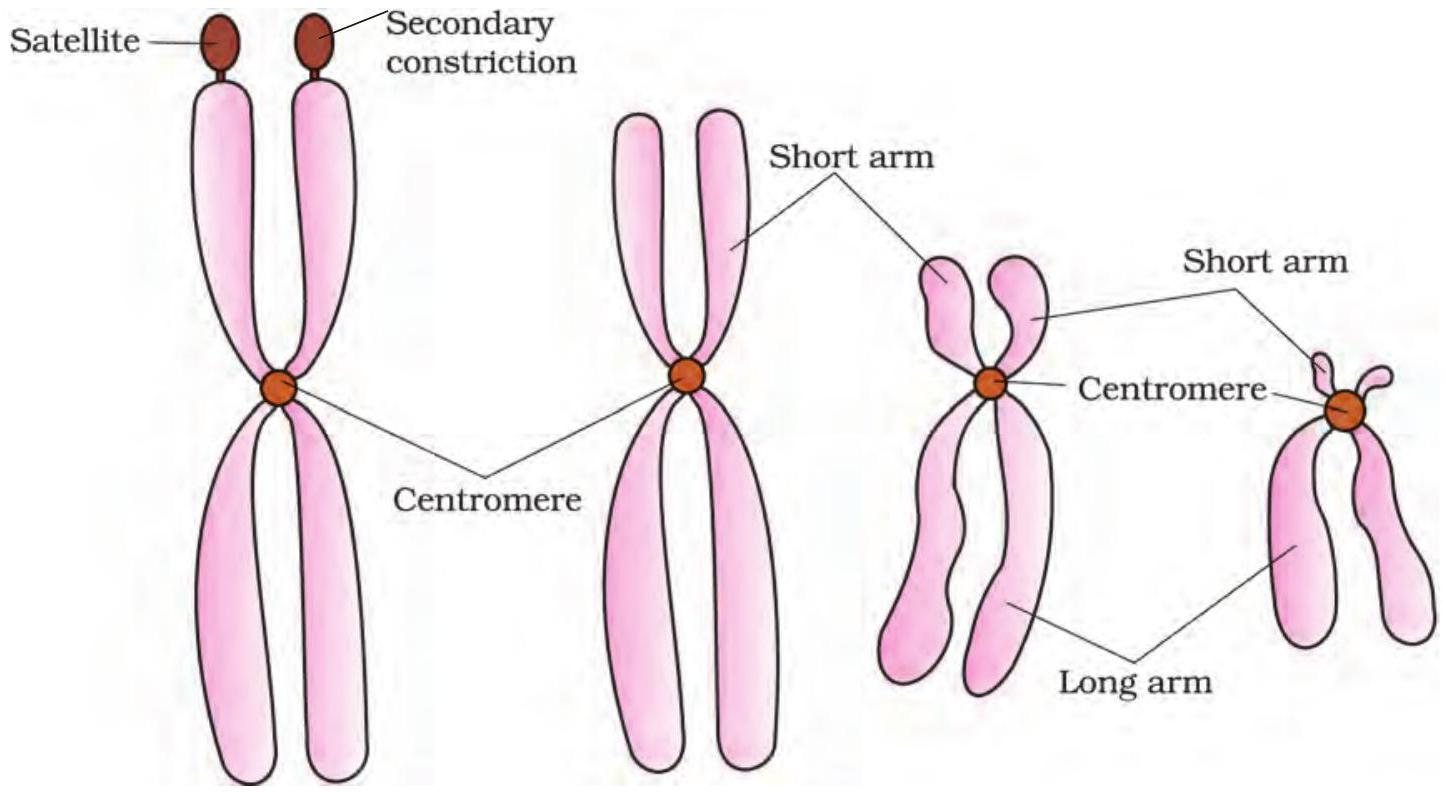
Centromere Position → Chromosome Type
Centromere position sets the relative length of the two chromosomal arms.
Use this position to classify chromosomes into four geometric types.
Quick check: Which type has equal arms?
Key Points:
- Metacentric: centromere central; p and q arms equal in length.
- Sub-metacentric: centromere slightly off-centre; one arm a bit longer.
- Acrocentric: centromere close to one end; short p arm, long q arm.
- Telocentric: centromere at terminal end; practically only one arm visible.