Law in Words
Newton’s Second Law
The rate of change of momentum of a body is directly proportional to the external force applied and takes the direction of that force.
Variables: Force (F), momentum \(p = m v\), and time interval \(\Delta t\). Why does “rate of change” point to acceleration rather than speed?
Equation Reveal
Variable Definitions
Applications
Label & Learn
Drag each unit label onto F, m, and a.
Unit Check
Confirm \(N = kg·m/s^{2}\) so both sides match.
Quick Example
If \(m = 2\,kg\) and \(a = 3\,m/s^{2}\), then \(F = 6\,N\).
Source: CBSE Grade 11 Textbook
Force vs Acceleration
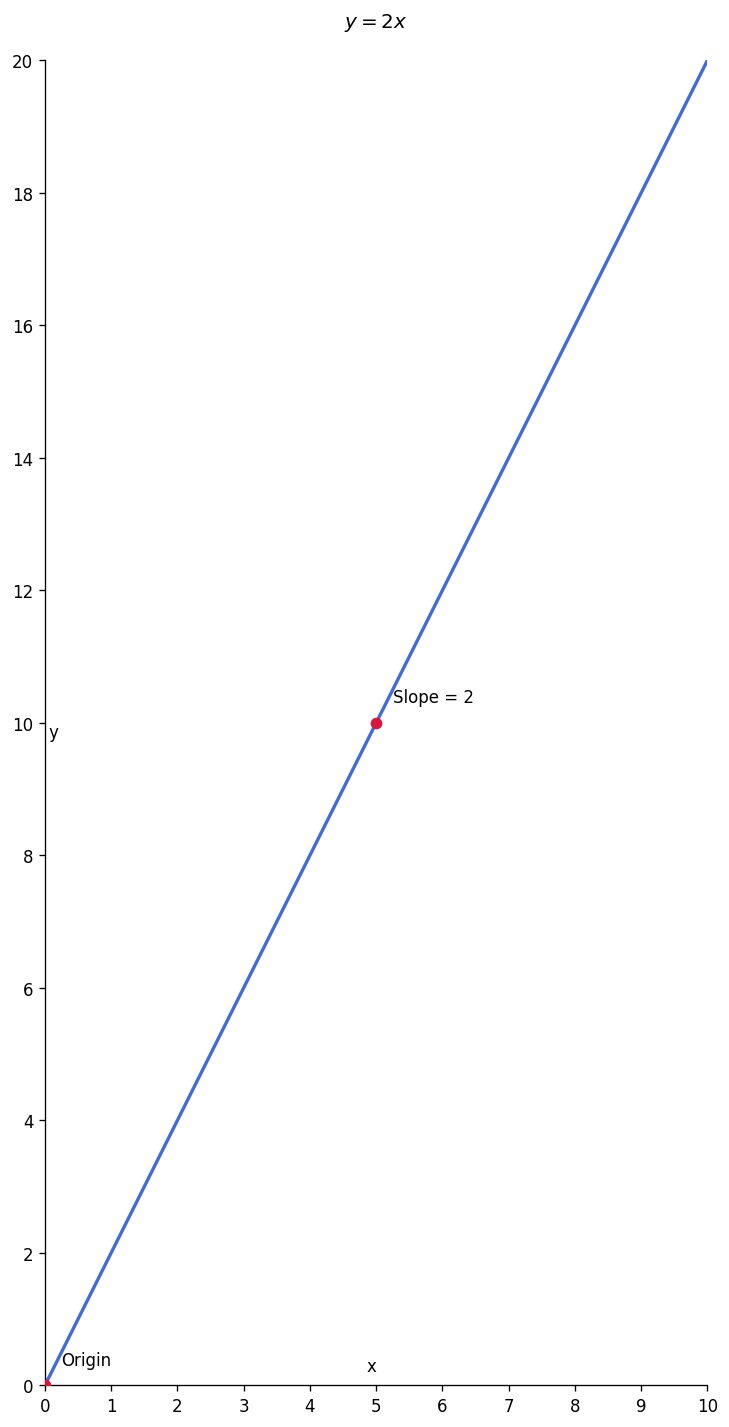
Force (N) vs Acceleration (m/s²)
Reading the F–a Graph
Linear relationship: a straight line through the origin shows force is directly proportional to acceleration for a fixed mass.
Graph interpretation: the slope \( \frac{F}{a} \) equals the mass. Steeper slope ⇒ heavier body.
Key Points:
- Slope gives mass in kilograms.
- Doubling force doubles acceleration when the mass is constant.
- Quiz: Read the slope—mass here is 2 kg.
From p to F = m a
Linear momentum equals mass times velocity.
Force is the time rate of change of momentum.
Assuming \(m\) is constant, only velocity varies with time.
Since \( \frac{d\vec{v}}{dt}=\vec{a} \), we reach the familiar form.
Key Insight:
Constant mass lets the momentum derivative collapse to acceleration, revealing \( \vec{F}=m\vec{a} \).
Multiple Choice Question
Question
A 3 kg drone experiences a net forward force of 12 N. What is its acceleration?
Hint:
Apply \(a = \frac{F}{m}\).
Correct!
Great job! \(a = \frac{12\,\text{N}}{3\,\text{kg}} = 4\ \text{m/s}^2\).
Incorrect
Revisit \(F = m a\) and divide the force by the mass to find acceleration.
Key Takeaways
Proportionality
Force increases directly with acceleration: \(F \propto a\).
Vector Direction
\( \vec F \) and \( \vec a \) point the same way—both are vectors.
Mass from Slope
Slope of an \(F\)–\(a\) graph equals the object’s mass.
Momentum Link
Same law: \(F = \\frac{dp}{dt}\)—force is rate of momentum change.